
UV Filterröhren
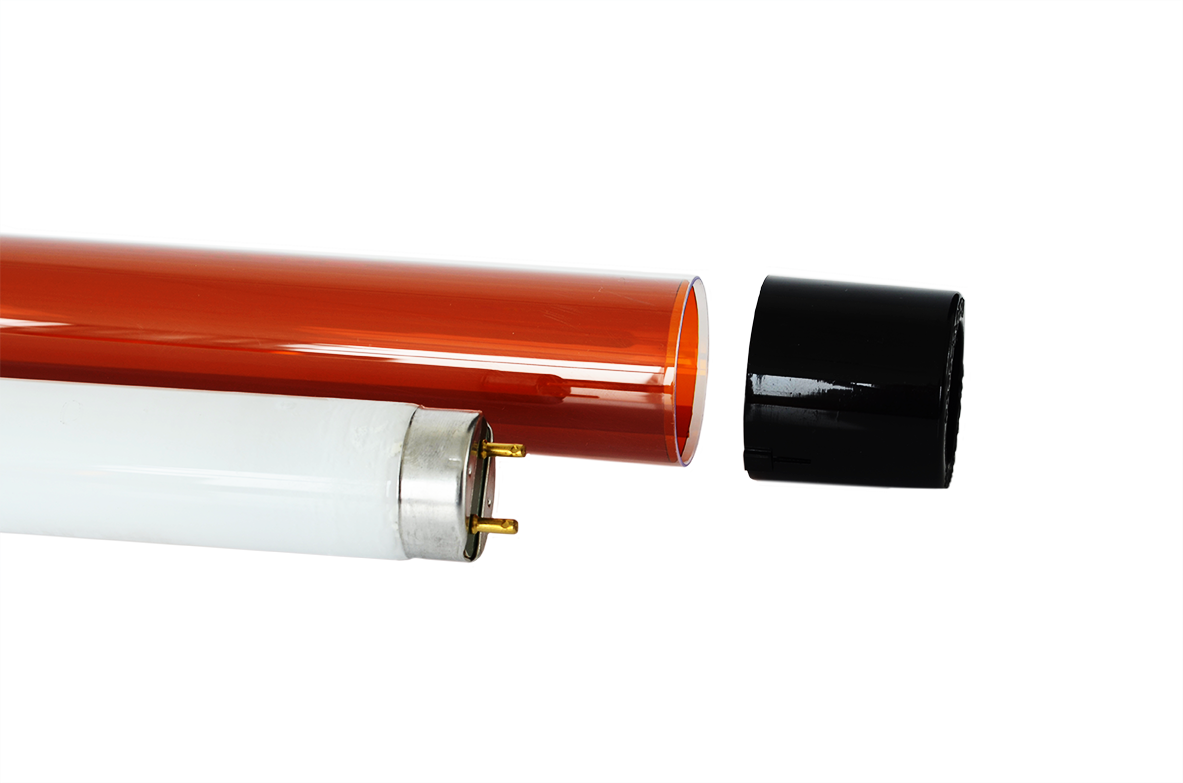
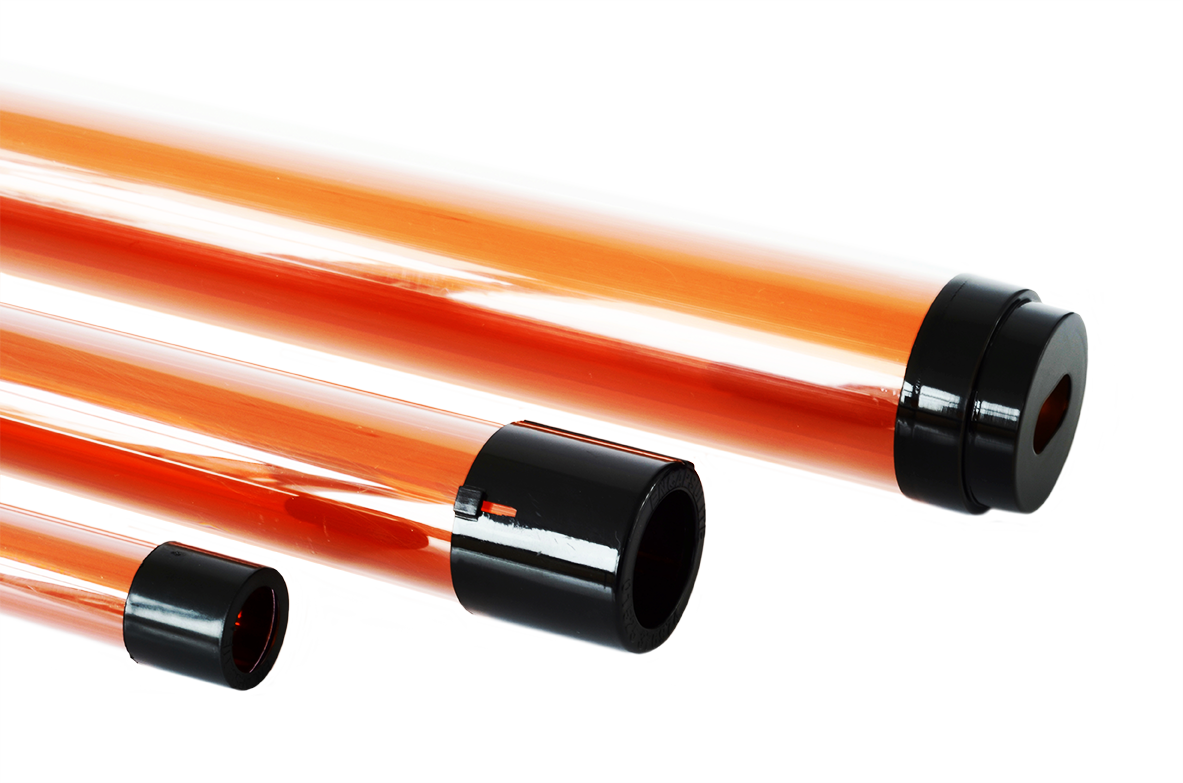
UV-Filter Sleeve Y520 T5
Lithoprotect® UV-Filter Sleeve Y520 for Fluorescent Tube T5 GENERAL INFORMATION The UV-filter sleeve Y520 T5 is especially designed for UV-photo-sensitive areas and blocks reliably ultraviolet and blue light below 520 nm. With this properties the UV-filter tube Y520 T5 is suitable for applications in yellow rooms and laboratories in which UV-sensitive materials and products are being used and processed. More precised, in the processing of photoresists in micro lithography, in the fabrication of printed circuit boards and even to protect UV-sensitive components in pharmaceutical production and research. A clear polycarbonate tube forms the outer casing of the filter tube, which has inside a layer of yellow-dyed cellulose triacetate foil. Due to the type of filter material, a reliable UV-protection can be achieved even for challenging applications or purposes. The UV-filter tube Y520 T5 is commonly used in the field of photolithography, the field of PCB, microelectronics manufacturing, photoresist fabrication, and handling of photoresists and diazofilms or other UV-sensitive devices or components. MAIN FEATURES Reliably blocks photons below 520 nm High heat resistance Outstanding optical purity Long-term UV-stable Not suitable for high-output (HO) tubes Easy installation CE, WEEE and ROHS compliant TECHNICAL DATA Material: Clear polycarbonate tube and dyed cellulose triacetate foil inside Diameter: End cap: 22 mm, tube: 20 mm Length: Different lengths available Temperature: -90 °C to 120°C Standards: BS 5454 1989, CE, WEEE and ROHS CHEMICAL CHARACTERISTICS The UV-filter tube Y520 T5 is waterproof and resistant to oils, greases, weak mineral acids, weak organic acids, alcohols and aliphatic hydrocarbons. Chlorinated hydrocarbons, ketones and aromatic solvents will partially dissolve the surface of the filter tube, which may deteriorate the optical properties. The UV-filter sleeve Y520 is not resistant to concentrated acids and alkaline liquids, which attack the sheath of the tube. TRANSMISSION The transmission characteristics of the UV-filter sleeve Y520 T5 are especially designed to the high quality requirements in “yellow rooms” (photolithography during manufacturing of electronic devices). According to the semi-logarithmic graph shown below, the transmission at 450 nm is about 0.0001 %, which means that it has decayed to a millionth of a part at this wavelength. If you want to compare this tube with other UV-filter tubes, please ask for a semi-logarithmic illustration. If you check the linear plot, you will see nothing than zero entries, because you cannot distinguish 0.1 and 0.0001% in such a kind of plot! Semi-Logarithmic Transmission Linear Transmission The transmission spectrum is not to be understood as a specification, but as an exemplary measurement on a Lot. FIRE BEHAVIOR The UV-filter tube Y520 T5 is self-extinguishing. PROCESSING With the UV-filter sleeve Y520 T5 it is possible to get a UV-free light source from a standard T5 fluorescent tube. Remove both end caps from the filter tube and insert your T5 fluorescent bulb with a G5 socket into the filter tube. Subsequently close both sides of the UV filter tube light-proof with the included end caps. After installation, please check that the end caps seal the G5 socket properly so that the UV-filter tube can fulfill its specifications. SCOPE OF DELIVERY 1 x Polycarbonate tube with UV-filter Y520 2 x Light-tight end cap for Fluorescent Tube T5 with G5 socket Dimensions and configuration of the UV-filter sleeve FURTHER INFORMATION Technical Datasheet: Technical Data UV-Filter Sleeve Y520 T5 english Technisches Datenblatt UV-Filterröhre Y520 T5 deutsch NOTE: All data and information relate to the best of our knowledge and are based on measurement and experience. It remains in your responsibility to check the suitability of our yellow foil for the intended use of it. Our products are regularly quality-tested and further developed. We therefore reserve the right to adjust without additional information, the chemical composition or physical characteristics of new knowledge.
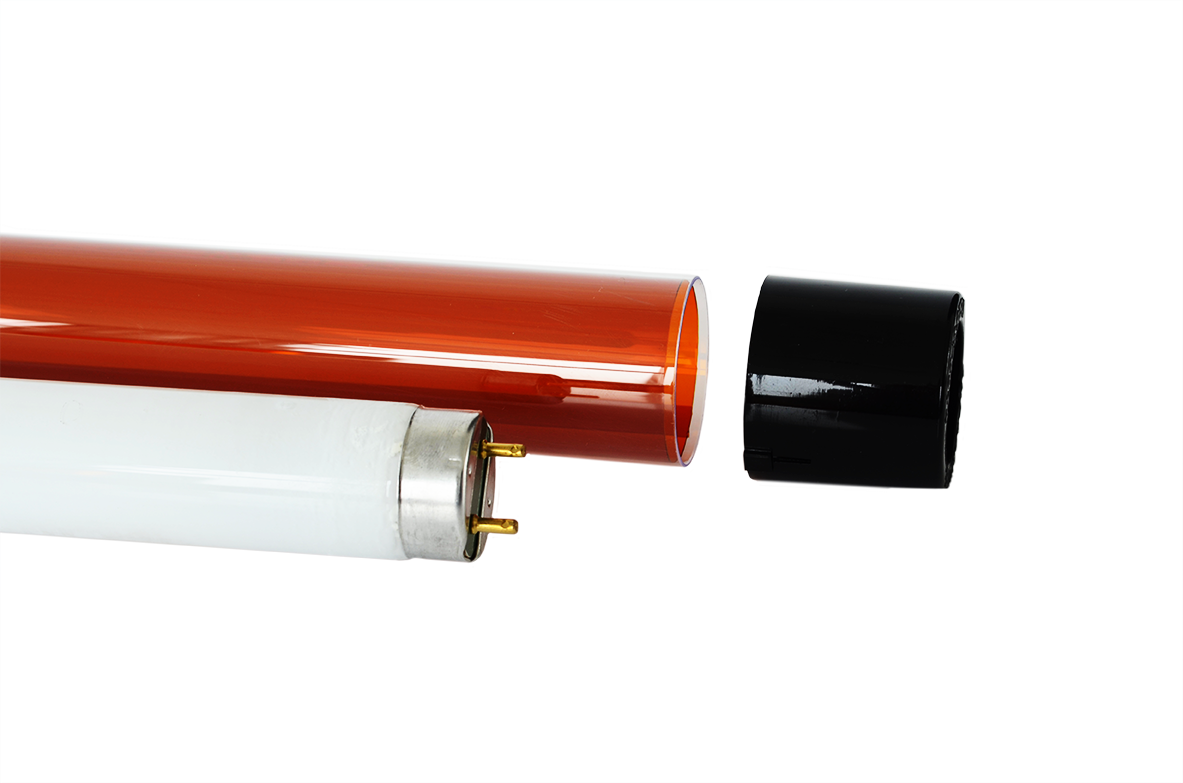
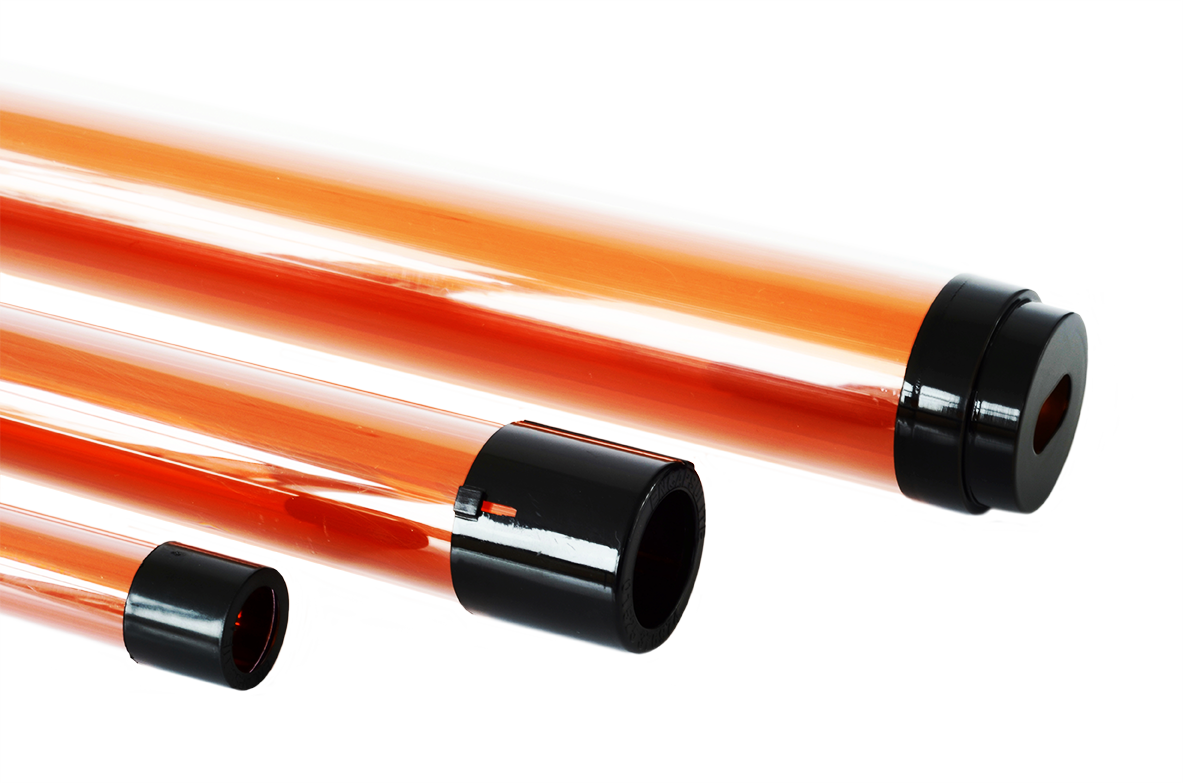
UV-Filter Sleeve Y520 T8
Lithoprotect® UV-Filter Sleeve Y520 for Fluorescent Tube T8 GENERAL INFORMATION The UV-filter sleeve Y520 T8 is especially designed for UV-photo-sensitive areas and blocks reliably ultraviolet and blue light below 520 nm. With this characteristic the UV-filter tube Y520 T8 is suitable for applications in yellow rooms and laboratories in which UV-sensitive materials and products are being used and processed. This can be photoresist processing in micro lithography, fabrication of printed circuit boards and even to protect UV-sensitive components in pharmaceutical production and research. A clear polycarbonate tube forms the outer casing of the filter tube, which has inside a layer of yellow-dyed cellulose triacetate foil. Due to the type of filter material, a reliable UV-protection can be achieved even for challenging applications or purposes. The UV-filter tube Y520 T8 is commonly used in the field of photolithography, the field of PCB, microelectronics manufacturing, photoresist fabrication, and handling of photoresists and diazofilms or other UV-sensitive devices or components. MAIN FEATURES Reliably blocks photons below 520 nm High heat resistance Outstanding optical purity Long-term UV-stable Not suitable for high-output (HO) tubes Easy installation CE, WEEE and ROHS compliant TECHNICAL DATA Material: Clear polycarbonate tube and dyed cellulose triacetate foil inside Diameter: End cap: 22 mm, tube: 20 mm Length: Different lengths available Temperature: -90 °C to 120°C Standards: BS 5454 1989, CE, WEEE and ROHS CHEMICAL CHARACTERISTICS The UV-filter tube Y520 T8 is waterproof and resistant to oils, greases, weak mineral acids, weak organic acids, alcohols and aliphatic hydrocarbons. Chlorinated hydrocarbons, ketones and aromatic solvents will partially dissolve the surface of the filter tube, which may deteriorate the optical properties. The UV-filter sleeve Y520 is not resistant to concentrated acids and alkaline liquids, which attack the sheath of the tube. TRANSMISSION The transmission characteristics of the UV-filter sleeve Y520 T8 are especially designed to the high quality requirements in “yellow rooms” (photolithography during manufacturing of electronic devices). According to the semi-logarithmic graph shown below, the transmission at 450 nm is about 0.0001 %, which means that it has decayed to a millionth of a part at this wavelength. If you want to compare this tube with other UV-filter tubes, please ask for a semi-logarithmic illustration. If you check the linear plot, you will see nothing than zero entries, because you cannot distinguish 0.1 and 0.0001% in such a kind of plot! Semi-Logarithmic Transmission Linear Transmission *The transmission spectrum is not to be understood as a specification, but as an exemplary measurement on a Lot. FIRE BEHAVIOR The UV-filter tube Y520 T8 is self-extinguishing. PROCESSING With the UV-filter sleeve Y520 T8 it is possible to get a UV-free light source from a standard T8 fluorescent tube. Remove both end caps from the filter tube and insert your T8 fluorescent bulb with a G5 socket into the filter tube. Subsequently close both sides of the UV filter tube light-proof with the included end caps. After installation, please check that the end caps seal the G5 socket properly so that the UV-filter tube can fulfill its specifications. SCOPE OF DELIVERY 1 x Polycarbonate tube with UV-filter Y520 2 x Light-tight end cap for Fluorescent Tube T8 with G5 socket Dimensions and configuration of the UV-filter sleeve FURTHER INFORMATION Technical Datasheet: Technical Data UV-Filter Sleeve Y520 T8 english Technisches Datenblatt UV-Filterröhre Y520 T8 deutsch NOTE: All data and information relate to the best of our knowledge and are based on measurement and experience. It remains in your responsibility to check the suitability of our yellow foil for the intended use of it. Our products are regularly quality-tested and further developed. We therefore reserve the right to adjust without additional information, the chemical composition or physical characteristics of new knowledge.